
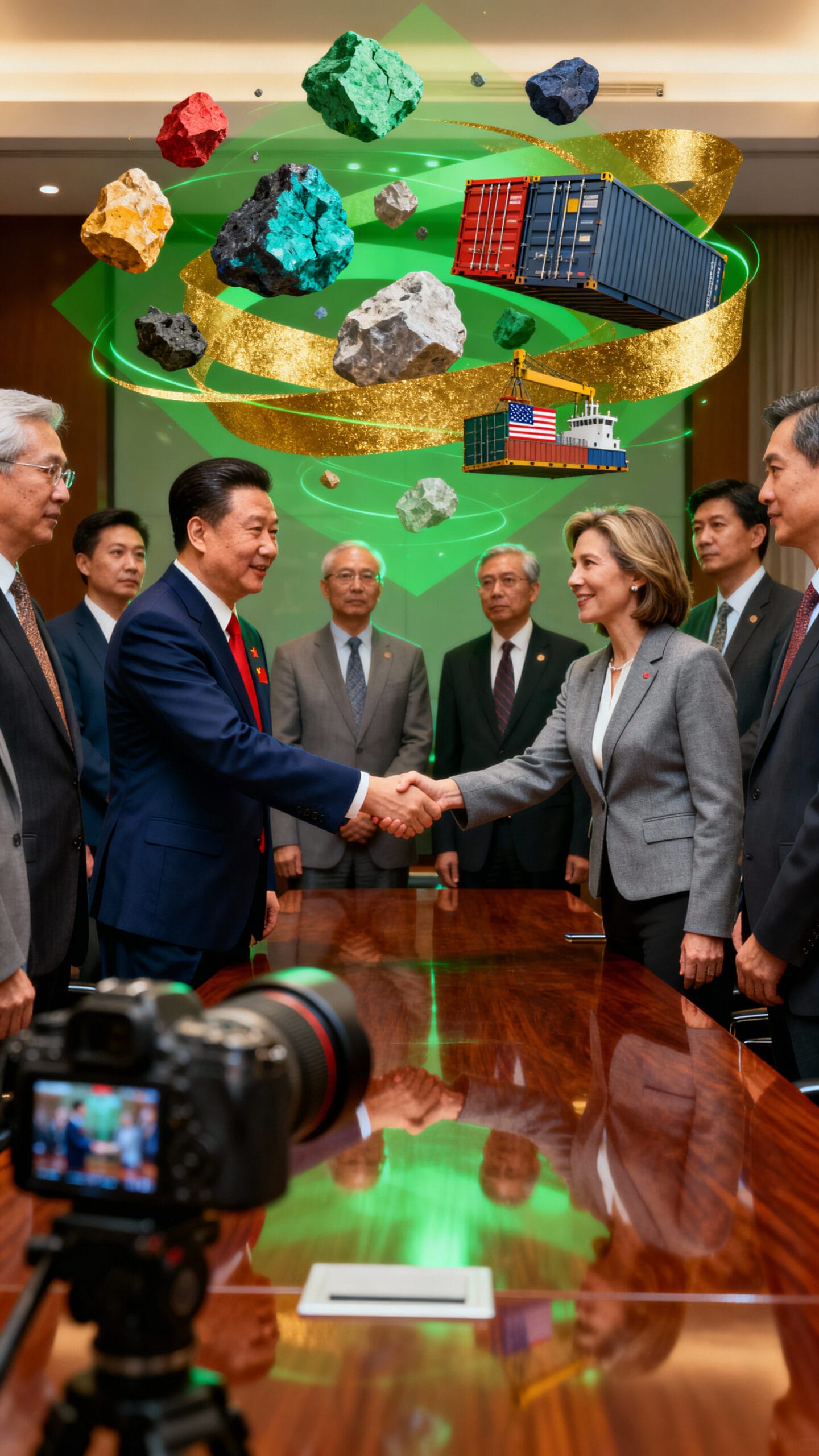
The Trump Xi trade deal 2025 marks one of the most significant shifts in U.S.–China economic relations since the 2019 Phase One agreement.
President Trump and President Xi Jinping have reached a sweeping trade and economic agreement in Seoul, marking a major step toward rebalancing trade with China while strengthening U.S. national security and manufacturing competitiveness.
🔹 Key Chinese Commitments in the Trump Xi Trade Deal 2025
China has agreed to:
- Suspend all retaliatory tariffs on U.S. goods imposed since March 2025 — including soybeans, pork, cotton, and dairy.
- Remove export restrictions on rare earth elements, gallium, germanium, antimony, and graphite, easing critical mineral supply tensions.
- End fentanyl precursor exports to North America and impose global controls on related chemicals.
- Lift non-tariff countermeasures and delist several U.S. firms from China’s “unreliable entities” list.
- Purchase 12 million metric tons (MMT) of U.S. soybeans by year-end and 25 MMT annually through 2028.
- Reopen Nexperia facilities for global semiconductor supply continuity.
🔹 U.S. Actions
In response, the United States will:
- Lower Section 301 cumulative tariffs on Chinese imports by 10 percentage points, effective Nov. 10, 2025.
- Extend current Section 301 exclusions through Nov. 10, 2026.
- Suspend new maritime and shipbuilding-sector actions under the Section 301 probe for one year.
- Pause expanded end-user controls for affiliates of listed Chinese entities for one year.
🔹 Strategic Implications
This deal is designed to restore rare earth access, stabilize U.S. supply chains, and reduce inflationary pressure on U.S. manufacturing inputs — especially for semiconductors, EV batteries, and defense materials.
It also signals a temporary easing of the tariff war while maintaining U.S. leverage through the 10% reciprocal duty that remains active until November 2026.
🌏 Wider Asia Trip Results
During the same trip:
- The U.S. signed reciprocal trade pacts with Malaysia and Cambodia.
- New critical minerals deals were announced with Thailand, Malaysia, and Japan.
- Japan confirmed $550 billion in U.S. industrial investments and new LNG energy purchases.
- South Korea pledged billions to strengthen maritime and technology cooperation.
⚙️ The Bottom Line
The 2025 U.S.–China accord marks a turning point in global trade policy, restoring market access for key American exports and reducing risks of supply chain disruption in rare earths and semiconductors — two of the world’s most strategic sectors.
Looking Ahead: Analysts say the Trump Xi trade deal 2025 could set the tone for a new trade normalization era. However, the one-year suspension of some Section 301 measures suggests negotiations are far from over, with both sides monitoring compliance closely through 2026.
You can find the full article about the deal here