
Taiwan Section 232 Tariff Changes Are Now Officially in Effect
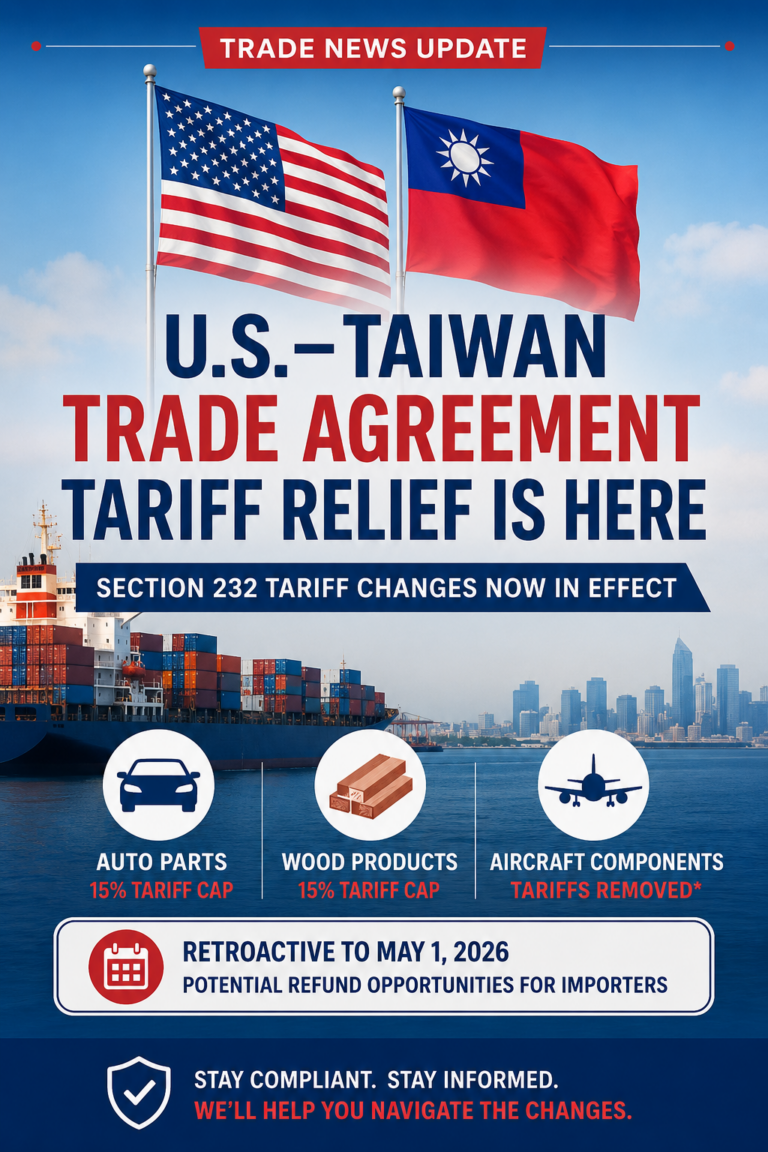
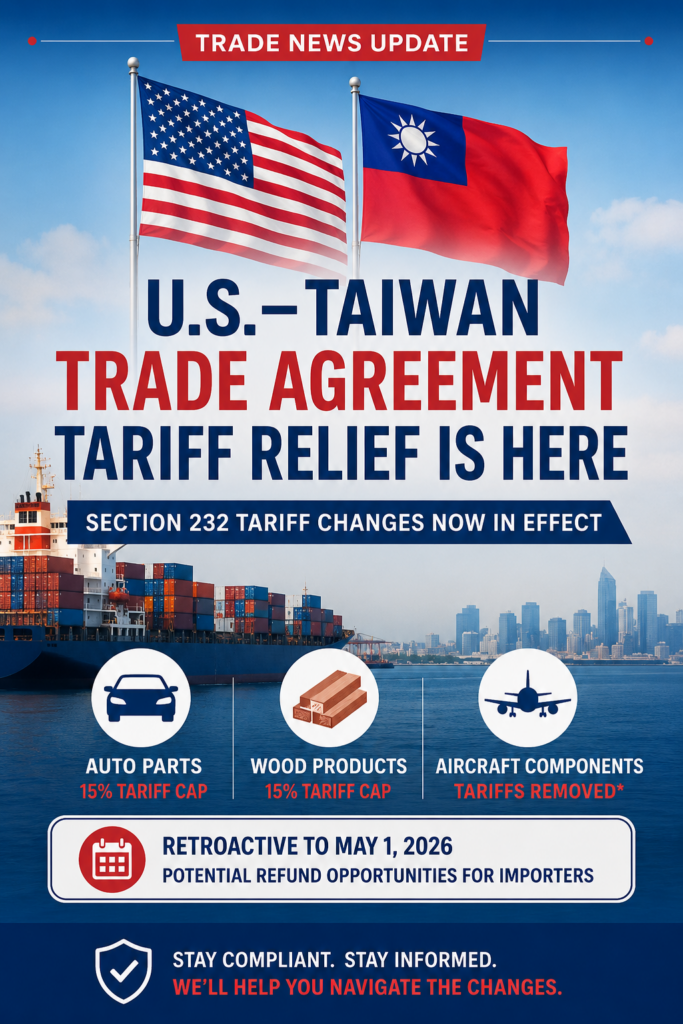
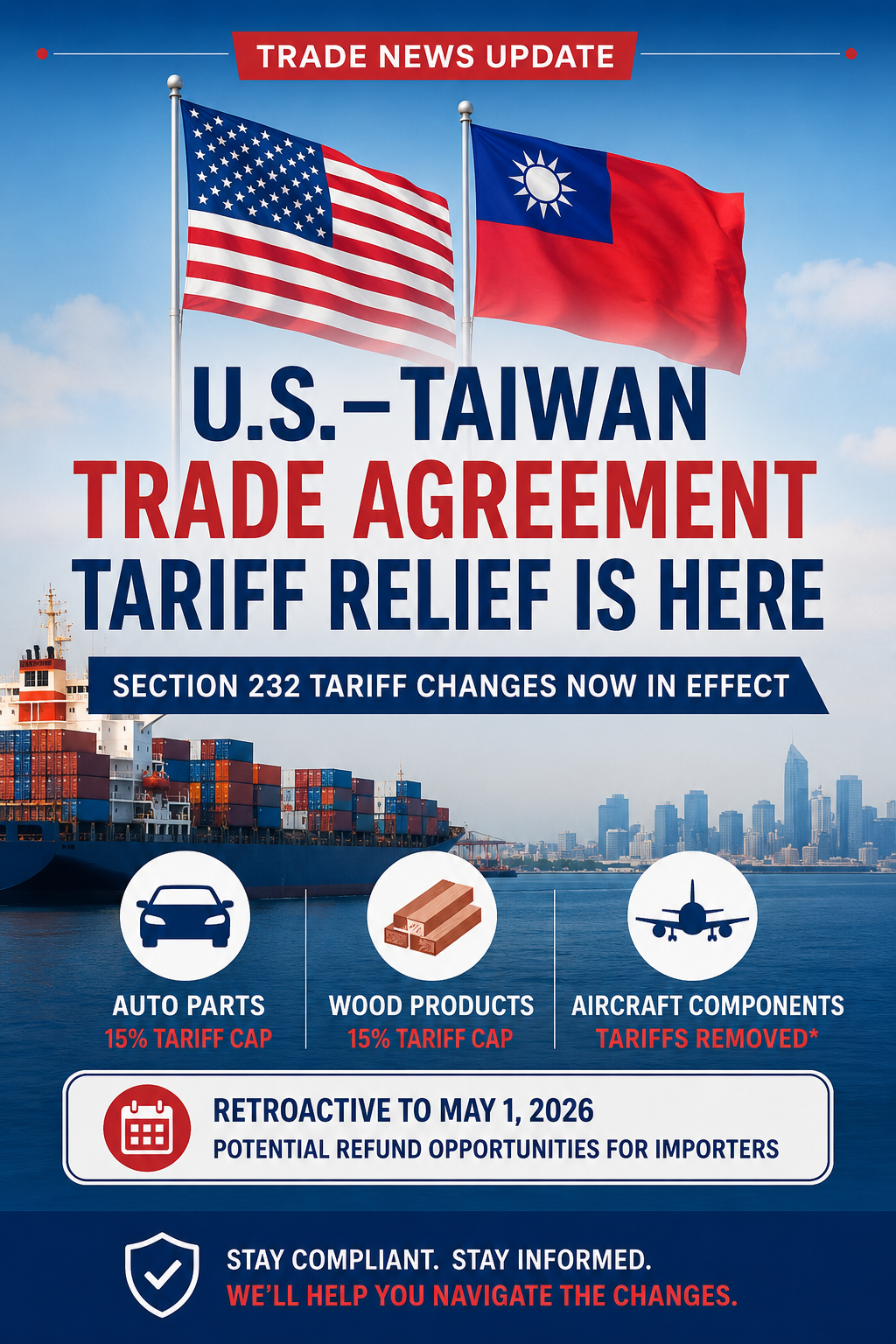
Taiwan Section 232 tariff changes are now officially in effect, bringing major duty relief for certain automotive parts, wood products, and qualifying aircraft components imported from Taiwan. Importers may also have refund opportunities retroactive to May 1, 2026.
The U.S. government has officially implemented tariff-related portions of a new trade and security agreement with Taiwan, reducing the impact of some Section 232 tariffs on automotive parts, timber and wood products, and certain aircraft components from Taiwan.
For many importers, this could mean lower landed costs, reduced tariff exposure, and in some cases, refund opportunities on recently filed entries.
The changes were published in the Federal Register on May 28, 2026, following agreements signed earlier this year between the American Institute in Taiwan (AIT) and the Taipei Economic and Cultural Representative Office (TECRO). The agreement is designed to strengthen semiconductor manufacturing, industrial investment, and supply chain security between the United States and Taiwan.
What Do the Taiwan Section 232 Tariff Changes Mean for Auto Parts?
One of the biggest updates under the Taiwan Section 232 tariff changes affects certain passenger vehicle and light truck parts imported from Taiwan.
The U.S. government will now limit Section 232 duties to a maximum total tariff of 15% for qualifying Taiwan-origin automotive parts.
In simple terms:
- If your regular HTS duty rate is already 15% or higher, no additional Section 232 tariff applies
- If your normal duty rate is below 15%, only enough Section 232 tariff will be added to bring the total duty rate to 15%
For example:
If a Taiwan-origin automotive part normally has a 5% duty rate, CBP would only apply an additional 10% Section 232 tariff, bringing the total to 15%.
New Chapter 99 tariff provisions were also created for these imports, including:
- 9903.94.66
- 9903.94.67
- 9903.94.68
- 9903.94.69
This is especially important for companies sourcing vehicle parts from Taiwan as an alternative manufacturing location.
Taiwan Section 232 Tariff Changes for Wood Products
The Taiwan Section 232 tariff changes also create relief for certain timber, lumber, and wood derivative products imported from Taiwan.
The United States will now apply a 15% tariff cap for qualifying products.
A new Chapter 99 tariff provision, 9903.76.24, has been created to administer this treatment.
This may impact importers bringing in:
- Wood materials
- Lumber products
- Certain derivative wood products
- Furniture-related materials, depending on classification
Because eligibility depends on HTS classification, importers should confirm whether their products fall within the qualifying provisions.
Aircraft Components Benefit Under Taiwan Section 232 Tariff Changes
Another major update under the Taiwan Section 232 tariff changes affects aerospace imports.
The United States will remove derivative Section 232 steel, aluminum, and copper tariffs on qualifying civil aircraft components from Taiwan.
This applies to non-military aircraft components under a large list of qualifying HTS classifications and introduces a new Chapter 99 provision:
9903.96.03.
For aerospace companies, airlines, maintenance providers, and aviation suppliers, this may significantly lower import costs on qualifying Taiwan-origin components.
Why Are These Taiwan Section 232 Tariff Changes Happening?
The tariff relief is tied to a broader U.S.–Taiwan trade and investment partnership focused on strengthening semiconductor manufacturing and reducing supply chain risk.
Under the agreement, Taiwan committed to support major investments in U.S. semiconductor, artificial intelligence, biotechnology, telecommunications, and advanced manufacturing sectors. Taiwanese companies are also expected to make substantial investments in expanding U.S. semiconductor and technology infrastructure.
In return, the United States agreed to modify certain Section 232 tariff treatment for Taiwan-origin products.
Important Date: Retroactive to May 1, 2026
Although the Federal Register notice was published on May 28, 2026, the Taiwan Section 232 tariff changes are effective for qualifying goods entered for consumption on or after May 1, 2026.
This is important because:
Some importers may qualify for duty refunds if higher Section 232 tariffs were already paid between May 1, 2026 and today.
CBP stated that refunds will be handled according to normal Customs refund procedures.
What Importers Should Do Now
If you import products from Taiwan, this is a good time to review your entries.
Review Taiwan-Origin Shipments
Look for imports involving:
- Automotive parts
- Timber and wood products
- Aircraft components
Check Your HTS Classifications
Eligibility depends on specific HTS classifications and Chapter 99 reporting requirements.
Review Entries Filed Since May 1, 2026
Some companies may have potential refund opportunities if higher tariffs were already paid.
Coordinate With Your Customs Broker
Because these updates involve new Chapter 99 HTS numbers and Section 232 treatment, importers should confirm eligibility and filing procedures with their customs broker before making corrections or filing refund claims.
What Happens Next?
The U.S. government stated that additional updates could still happen as implementation continues. Officials will continue monitoring trade and national security conditions related to Section 232 and may make future changes if needed.
Want to stay updated on tariff developments? Visit our Tariff Updates Page to see the latest Section 232, Section 301, and CBP trade developments.
Importers can also review the official Federal Register notice for complete implementation details.