
What Happened
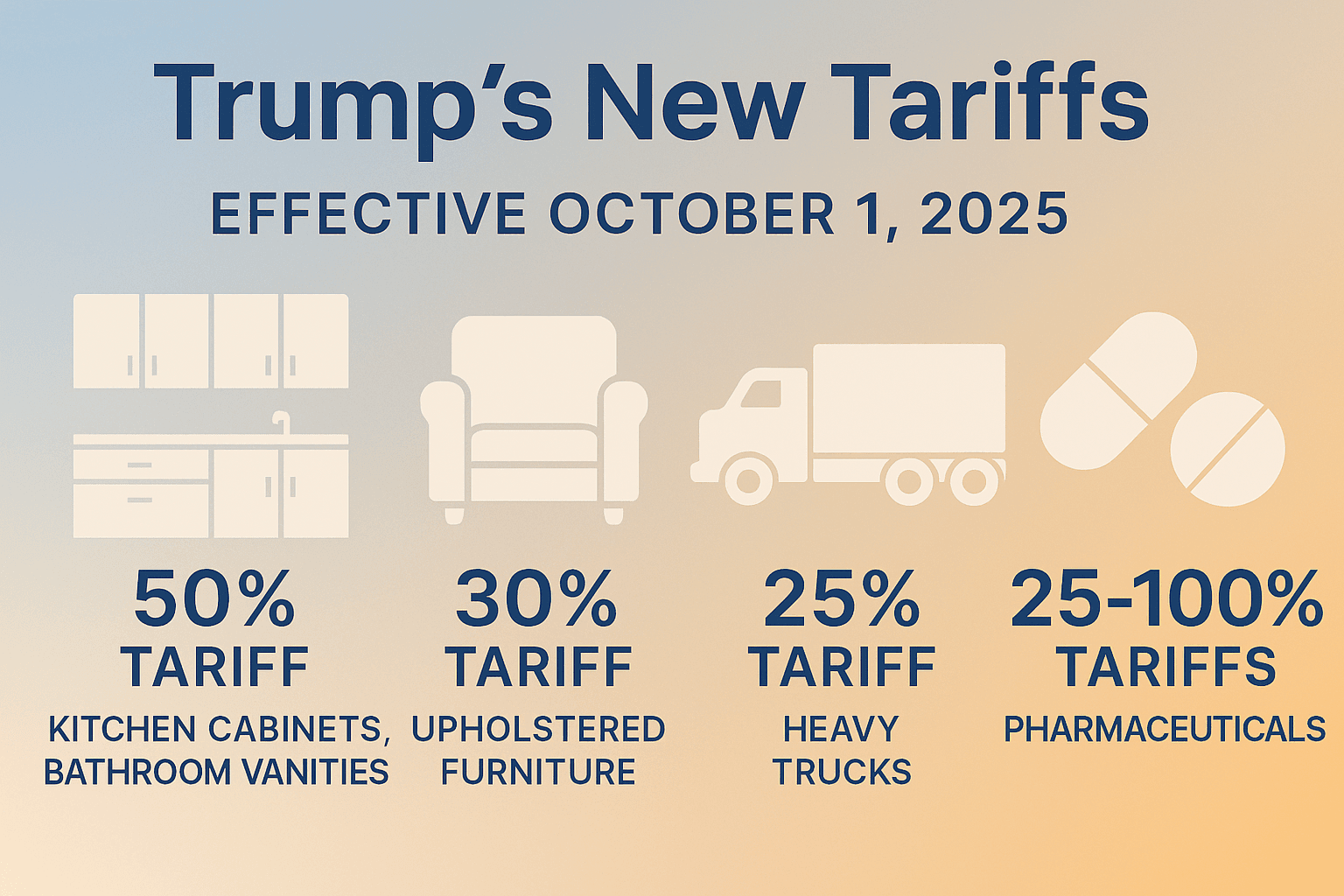
Starting October 1, 2025, President Trump announced new tariffs:
- 50% tariff on kitchen cabinets, bathroom vanities, and related products
- 30% tariff on upholstered furniture
- 25% tariff on heavy trucks imported from outside the U.S.
- 25–100% tariffs on branded or patented pharmaceuticals
👉 Official statements and details can be found on the White House, USTR, and Federal Register.
Why These Tariffs Were Announced
Trump says these measures are to protect U.S. manufacturers from “flooding” of imports and to strengthen national security.
What It Means for Importers
- Higher import costs – Importers will pay the tariffs directly to U.S. Customs.
- Thinner margins – Unless absorbed, costs will be passed down the supply chain.
- Supply chain shifts – Companies may need to source from non-tariff countries or consider U.S. manufacturing.
What It Means for Consumers
- Price increases are expected on furniture, cabinets, trucks, and drugs.
- Studies show tariffs can cost U.S. households $1,200–$3,800 per year in higher prices.
- Lower-income families feel the biggest impact, as essentials get more expensive.
Recommendations for Importers
- Diversify sourcing (e.g., shift production to Mexico, Vietnam, or other low-tariff regions).
- Use tariff tools like duty drawback, FTZs, or bonded warehouses.
- Renegotiate supplier contracts to share tariff burdens.
- Stay updated on CBP CSMS messages and Federal Register notices.
Recommendations for Consumers
- Compare U.S.-made alternatives where possible.
- Plan big purchases early, before price hikes filter through.
- Be aware that drug prices may rise sharply – check with insurers for generic or covered alternatives.
Global Impact
- Retaliation from Europe, China, and others is possible, hitting U.S. exports like agriculture.
- Supply chains are already shifting, accelerating the move away from reliance on China.