
If you’re planning to start importing goods into the United States, it can feel overwhelming at first. The process involves multiple steps — from understanding customs requirements to ensuring your shipment arrives smoothly.
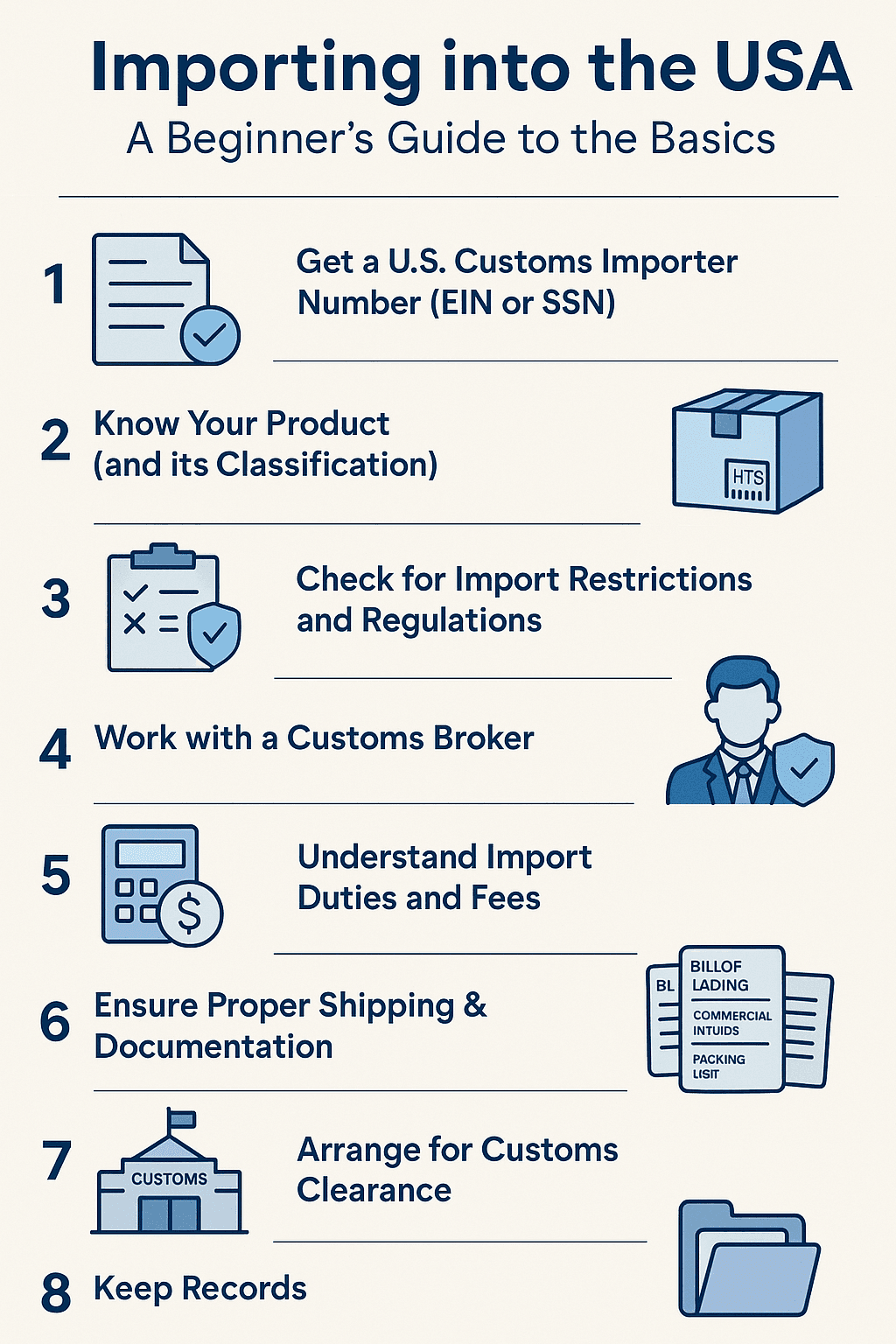
This simple guide walks you through the 8 key steps every new importer should know before bringing products into the U.S.
1️⃣ Get a U.S. Customs Importer Number (EIN or SSN)
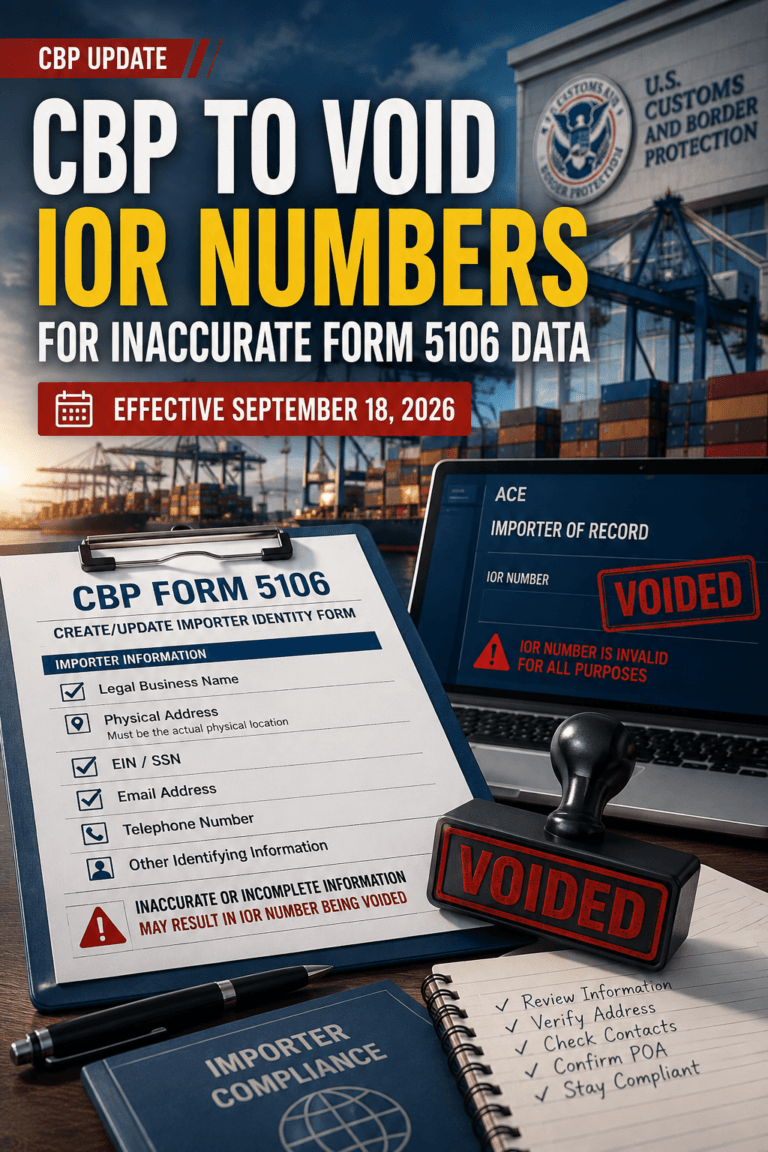
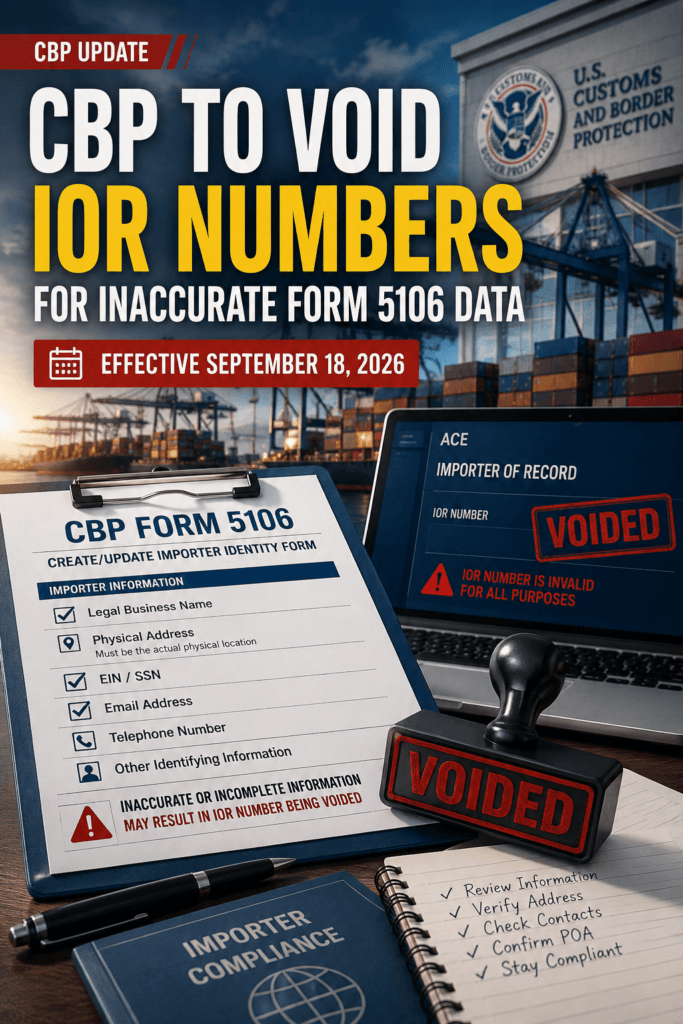
Before anything else, you’ll need a valid Importer Number.
- Most businesses use their EIN (Employer Identification Number).
- If you’re an individual importer, your Social Security Number (SSN) can be used instead.
This number allows U.S. Customs and Border Protection (CBP) to track your shipments and ensure compliance.
2️⃣ Know Your Product (and Its Classification)
Every product imported into the U.S. must be classified under the Harmonized Tariff Schedule (HTS).
This classification determines your duty rates, import requirements, and whether any special restrictions apply.
💡 Tip: Use reliable classification tools or consult a licensed customs broker if you’re unsure which HTS code applies to your item.
3️⃣ Check for Import Restrictions and Regulations
Certain products require permits, licenses, or must meet specific agency rules (like FDA, USDA, EPA, or FCC).
Before shipping, verify if your product has:
- Safety standards
- Quotas or import limits
- Bans or country-of-origin restrictions
Doing this early prevents costly delays or rejections at the port.
4️⃣ Work with a Licensed Customs Broker
A customs broker helps you navigate all CBP regulations, file required documentation, and make sure duties and taxes are paid correctly.
Working with an expert saves time and ensures your shipment clears without issues.
5️⃣ Understand Import Duties and Fees
Every imported item is subject to duties, tariffs, and fees — based on its HTS code, origin, and value.
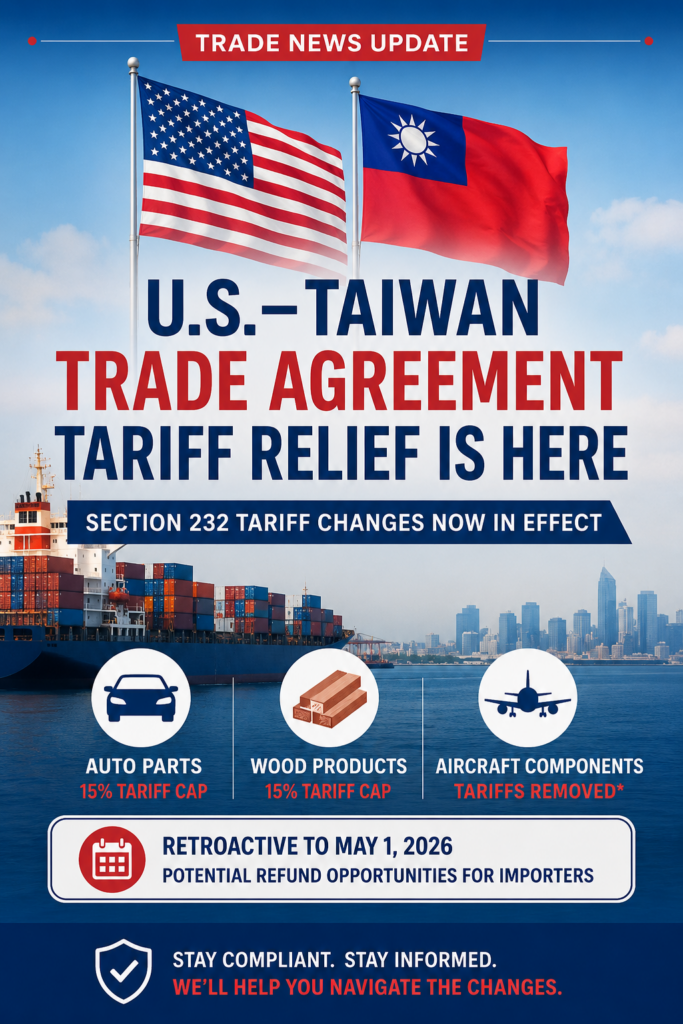
There may also be additional Section 232, 301, or IEEPA tariffs for certain countries or materials.
Always estimate these costs before finalizing your shipment so you know your total landed cost.
6️⃣ Ensure Proper Shipping & Documentation
Accurate paperwork is crucial. Make sure your supplier provides:
- Commercial Invoice
- Packing List
- Bill of Lading or Air Waybill
These documents must match the information you submit to customs.
7️⃣ Arrange for Customs Clearance
Once your shipment arrives, it must be cleared by CBP.
Your customs broker will submit the entry paperwork, pay duties, and handle any inspections or holds.
After clearance, your goods can move freely within the U.S.
8️⃣ Keep Records
U.S. law requires importers to keep all customs records for at least 5 years — including invoices, shipping documents, and correspondence.
Having organized records makes audits or post-entry corrections much easier.
📞 Need Help?
Importing can seem complex at first, but you don’t have to do it alone.
If you need help classifying your products, estimating duties, or managing customs paperwork — contact our team anytime.
We’ll make sure your import process runs smoothly from start to finish.