
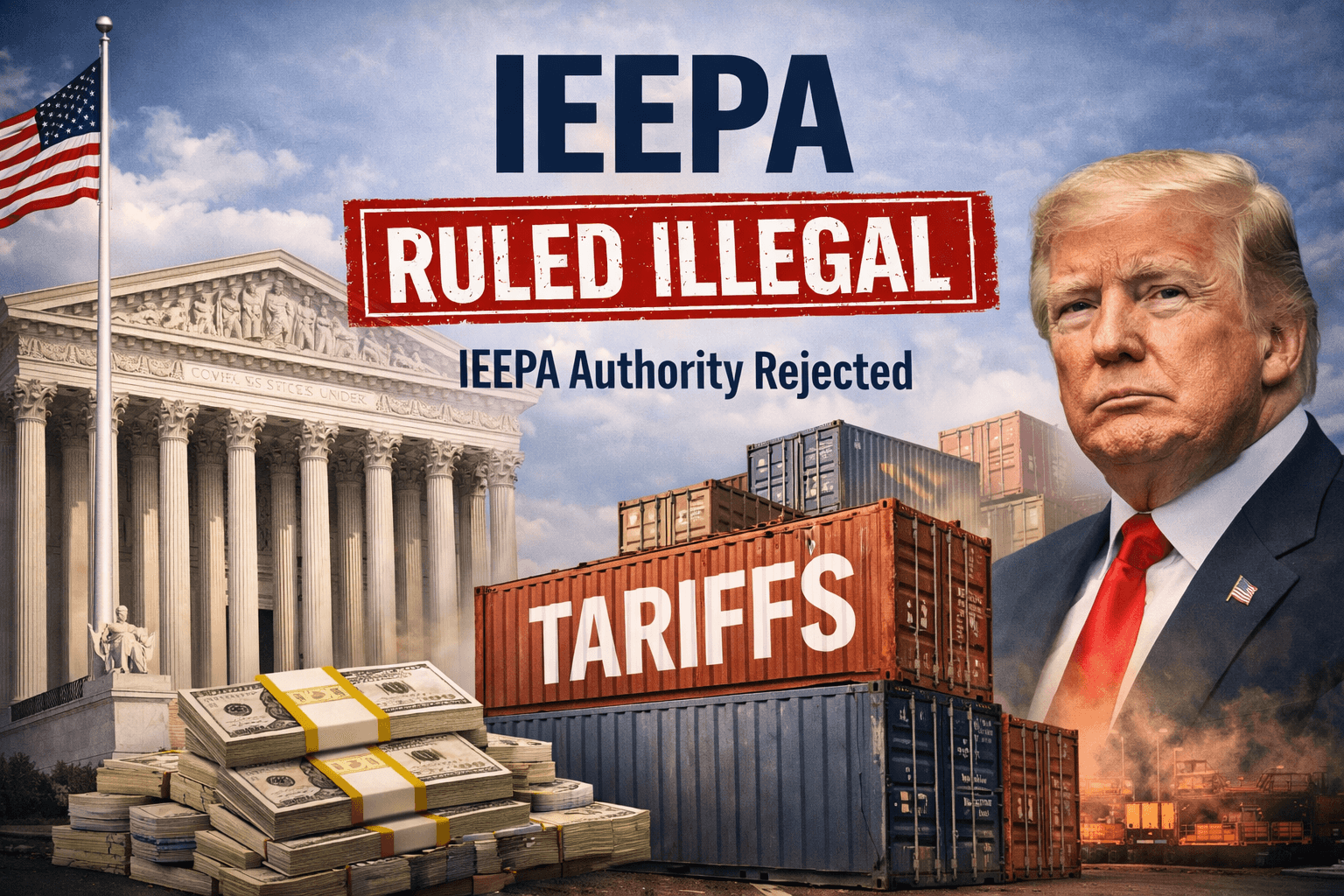
Supreme Court Emergency Tariffs Ruling: IEEPA Tariffs Declared Illegal
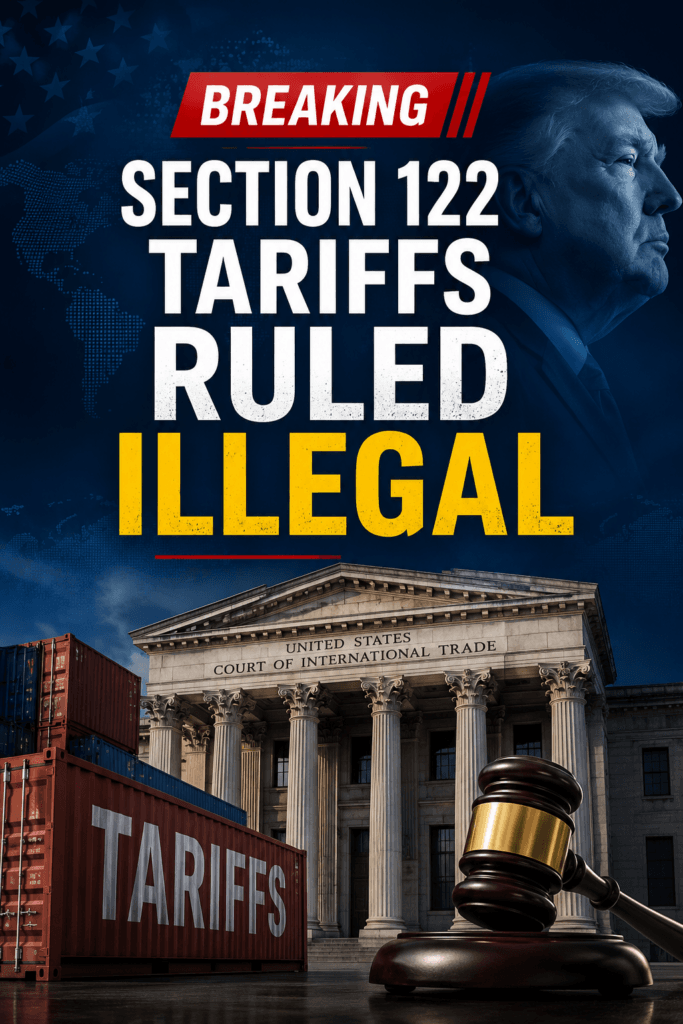
The Supreme Court emergency tariffs ruling marks one of the most consequential trade law decisions in modern U.S. history. In a 6–3 decision, the Court held that tariffs imposed under the International Emergency Economic Powers Act (IEEPA) exceeded presidential authority and violated federal law.
The ruling significantly limits the executive branch’s ability to impose tariffs without direct congressional authorization.
What the Supreme Court Emergency Tariffs Ruling Decided
At the core of the case was whether IEEPA gives the President authority to impose sweeping global tariffs during a declared national emergency.
The Court concluded:
- IEEPA allows the regulation of financial and economic transactions.
- It does not clearly authorize the imposition of tariffs.
- The Constitution grants tariff and taxation authority to Congress.
- Major economic powers require clear legislative approval.
This Supreme Court emergency tariffs ruling reinforces separation of powers and clarifies that emergency authority does not automatically include tariff authority.
Why This Supreme Court Emergency Tariffs Ruling Matters
More than $130 billion in duties were collected under the invalidated tariff program.
The Supreme Court did not determine whether those funds must be refunded. Instead, the issue now moves to lower federal courts, which will decide:
- Whether importers are legally entitled to repayment
- Whether refunds will be automatic or require protests
- How liquidation status affects recovery
- Whether the interest may apply
For importers and customs professionals, this creates significant financial and procedural implications.
Could Replacement Tariffs Be Imposed?
Although the Supreme Court emergency tariffs ruling blocks tariffs under IEEPA, it does not eliminate other trade authorities.
The administration may consider alternative statutes, including:
- Section 232 (national security tariffs)
- Section 301 (unfair trade practices)
- Section 201 (safeguards)
Each of these authorities requires specific findings, investigations, and procedural safeguards.
For reference, Section 232 investigations are administered by the U.S. Department of Commerce and explained publicly at: https://www.commerce.gov
Trade remedy laws under Section 301 are overseen by the Office of the U.S. Trade Representative: https://ustr.gov
These are DoFollow public government resources.
Impact on Importers and Trade Compliance
The Supreme Court emergency tariffs ruling may affect:
- Liquidated and unliquidated entries
- Protest deadlines under 19 CFR Part 174
- Ongoing litigation
- Duty drawback claims
- Bond sufficiency and revenue exposure
Importers should immediately:
- Review affected entries
- Identify liquidation dates
- Monitor lower court proceedings
- Consult trade counsel
If duties were paid under the invalidated IEEPA framework, proactive review is critical.
Broader Legal Significance
This decision is not just about tariffs.
It reaffirms that:
- Congress controls taxation and tariff authority
- Emergency statutes must be narrowly interpreted
- Major economic decisions require clear legislative backing
The Supreme Court emergency tariffs ruling could influence future executive actions beyond trade, especially where emergency powers are invoked.
What Happens Next?
Lower courts will now address refund mechanisms and administrative procedures. Litigation could continue for months or even years.
At the same time, policymakers may respond legislatively — either clarifying IEEPA authority or reinforcing congressional control over tariff measures.
Businesses engaged in global trade should remain cautious and monitor developments closely.
Conclusion
The Supreme Court emergency tariffs ruling fundamentally reshapes the limits of executive trade authority. While uncertainty remains regarding refunds and replacement measures, one point is clear:
IEEPA cannot be used as a standalone legal basis for sweeping tariff programs without congressional approval.
We will continue tracking developments and provide structured updates for importers and compliance professionals.