
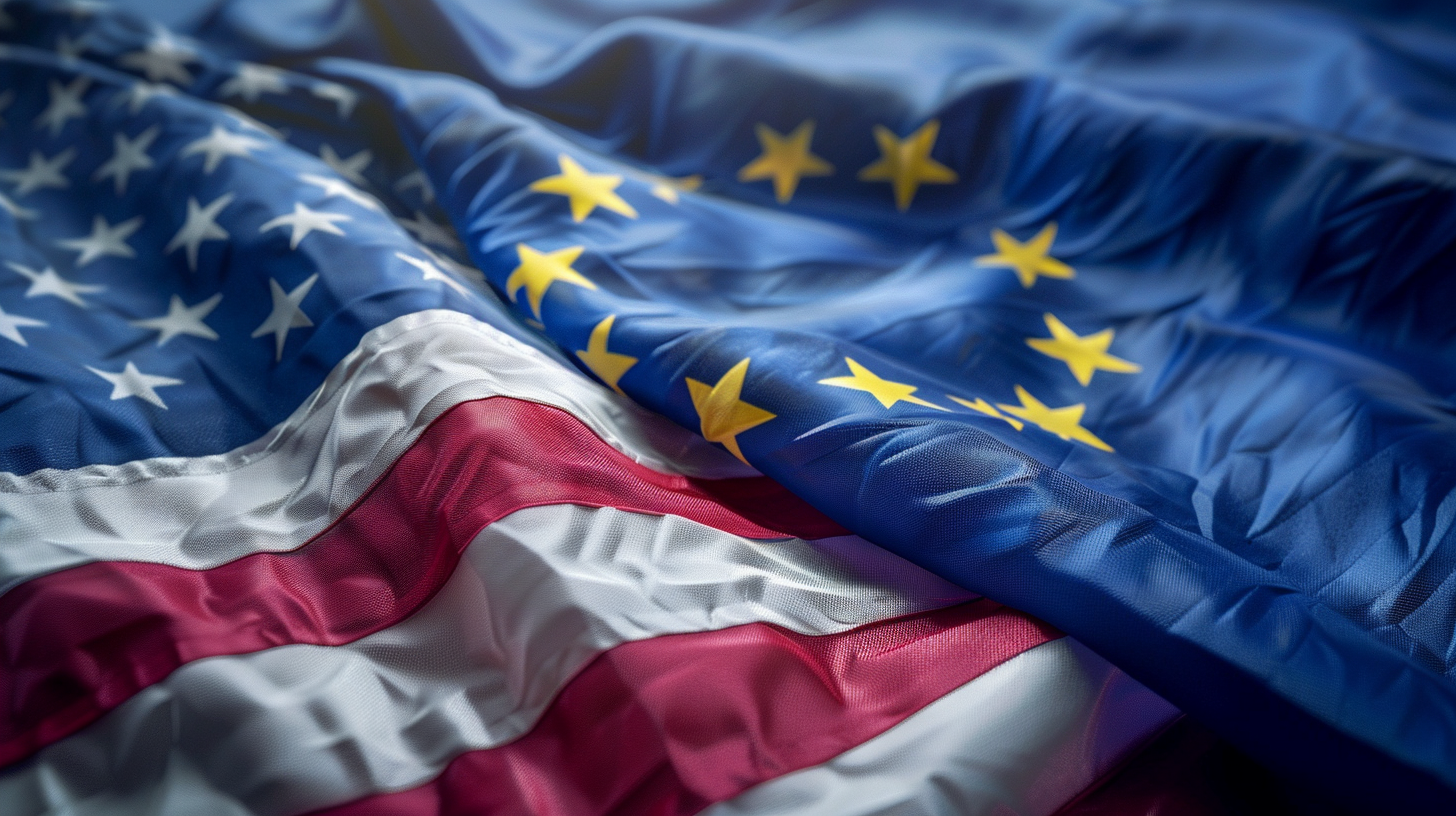
Trump Greenland tariffs were announced Saturday after President Donald Trump said the U.S. would impose new duties on Denmark and several European allies.
These Trump Greenland tariffs mark one of the most unusual trade actions in modern U.S.–Europe relations, linking import duties directly to a geopolitical demand.
According to Trump, the tariffs will remain in place until a deal is reached for what he called the “complete and total purchase of Greenland.” If no agreement is reached by June 1, the tariffs would rise sharply to 25%.
The additional countries affected by the proposed tariffs are Norway, Sweden, France, Germany, the United Kingdom, the Netherlands, and Finland.
Trump Greenland Tariffs Spark Protests and EU Backlash
Trump’s announcement quickly sparked public backlash in Greenland. On Saturday, protesters gathered outside the U.S. Consulate in Nuuk, holding Greenlandic flags and protest signs opposing the idea of a U.S. acquisition of the island.
Greenland is an autonomous territory within the Kingdom of Denmark, and the proposal has been widely rejected by local leaders and residents.
Trump Cites China, Russia, and Global Security
In a series of posts on Truth Social, Trump framed the issue as one of global security.
“China and Russia want Greenland, and there is not a thing that Denmark can do about it,” Trump wrote.
He added that only the United States, under his leadership, could manage the situation “very successfully.”
Trump also criticized joint security exercises conducted by Denmark and European allies in and around Greenland, calling them a “very dangerous situation for the safety, security, and survival of our planet.”
Rising Tensions With Europe and NATO Allies
The tariff announcement marks a significant escalation in tensions between the U.S. and its European partners and raises concerns about long-term stability within NATO.
The move comes despite existing trade arrangements:
- A U.S.–EU framework agreement that caps tariffs at 15%
- A U.S.–UK agreement that limits tariffs to 10%
It remains unclear whether the newly announced tariffs would override these agreements or be added on top of them.
The European Union is the United States’ largest trading partner and its biggest source of imports.
Strong Pushback From European Leaders
European leaders responded swiftly and forcefully.
European Commission President Ursula von der Leyen and European Council President António Costa issued a joint statement saying the EU stands “in full solidarity with Denmark and the people of Greenland.”
They warned that the tariffs would:
- Undermine transatlantic relations
- Risk a dangerous downward spiral in global trade
Several European officials suggested pausing or suspending progress on the U.S.–EU trade deal in response. Lawmakers also discussed deploying the EU’s Anti-Coercion Instrument, sometimes referred to as Europe’s “trade bazooka.”
European leaders, including the European Commission, warned that the Trump Greenland tariffs could undermine long-standing transatlantic trade relations.
UK, Nordic States, and France Reject Tariff Threats
UK Prime Minister Keir Starmer said imposing tariffs on allies for NATO-related security cooperation is “completely wrong” and confirmed the UK would address the issue directly with Washington.
Sweden’s Prime Minister Ulf Kristersson stated:
“We will not allow ourselves to be blackmailed. Only Denmark and Greenland decide on issues concerning Denmark and Greenland.”
French President Emmanuel Macron echoed the sentiment, saying that “tariff threats are unacceptable” and would not influence Europe’s position.
Germany also confirmed it is coordinating with EU partners on a joint response.

Military Presence in Greenland Adds Pressure
Tensions have grown further as European troops recently arrived in Greenland, signaling support for Denmark. Sweden confirmed it sent military officers to help plan a joint exercise known as Operation Arctic Endurance.
Danish Foreign Minister Lars Løkke Rasmussen said after meeting with U.S. Secretary of State Marco Rubio that Trump’s interest in Greenland is clear—but “not in the interest of the Kingdom of Denmark.”
Potential Impact on Prices and U.S. Consumers
The proposed tariffs arrive at a sensitive time for U.S. consumers already dealing with cost-of-living pressures.
Economists warn that higher tariffs on European imports could increase prices on:
- Pharmaceuticals
- Aircraft and industrial components
- Automotive and manufacturing inputs
Germany, in particular, is a major supplier of industrial and pharmaceutical products to the U.S.
Mixed Reaction in Washington
The reaction inside the U.S. has been divided.
Senator Tom Cotton supported Trump’s view, calling Greenland vital to U.S. national security.
Others were sharply critical. Senator Lisa Murkowski described the tariffs as “unnecessary and punitive,” while Senators Thom Tillis and Jeanne Shaheen warned the policy could divide NATO and raise costs for American families and businesses.
Legal Authority Still Unclear
One major question remains unresolved: under what legal authority would these tariffs be imposed?
Current tariffs on the UK and EU rely on the International Emergency Economic Powers Act. The Supreme Court of the United States is expected to rule soon on whether that law allows Trump to impose country-specific “reciprocal” tariffs.
What Happens Next?
With protests underway, diplomatic ties under strain, and legal questions unresolved, the situation remains highly fluid. If no agreement is reached by June 1, the planned increase to 25% tariffs could significantly reshape U.S.–Europe trade relations.
For now, businesses, importers, and consumers on both sides of the Atlantic are watching closely. Read more on how recent tariff decisions are affecting importers in our latest U.S. trade policy update.