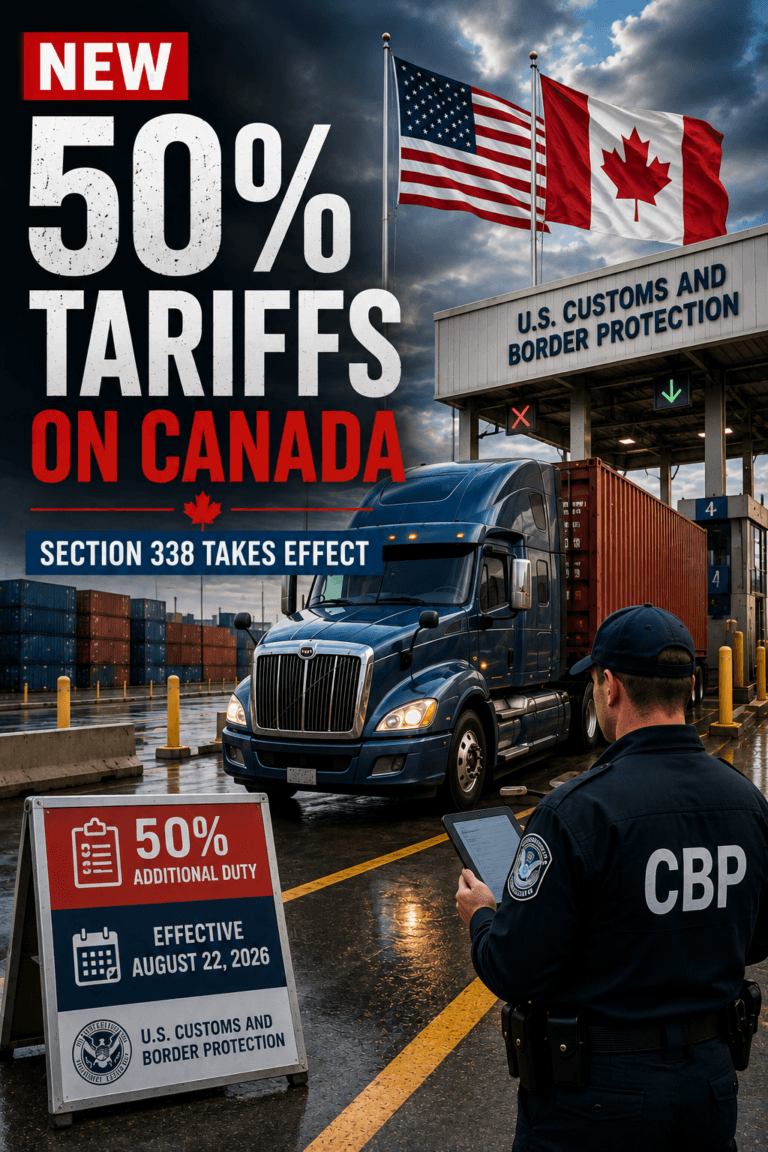

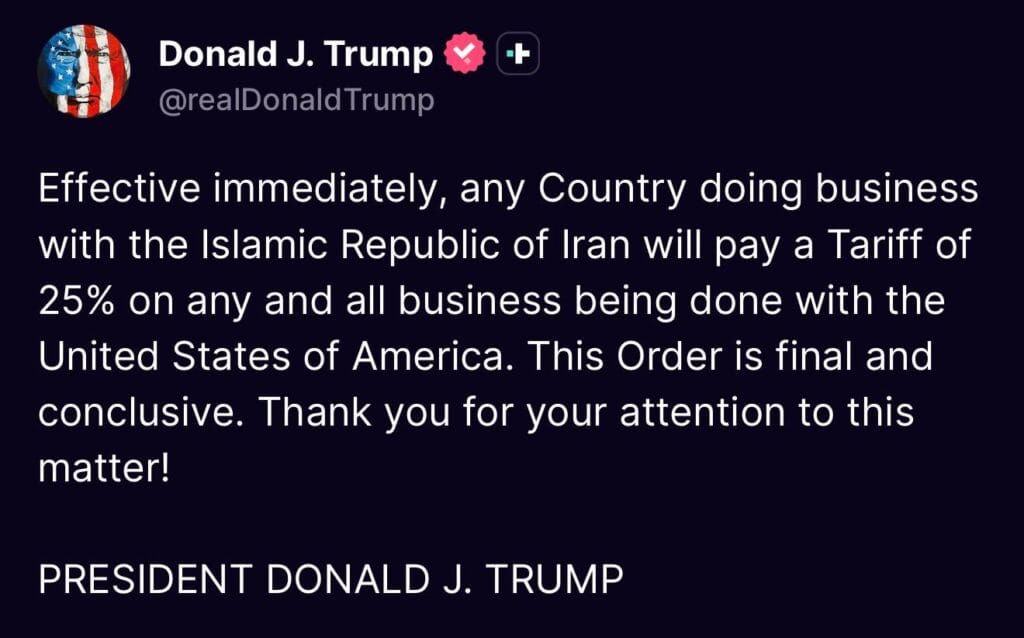
Washington, D.C. — U.S. President Donald Trump announced a new trade rule that places a 25% tariff on any country that continues doing business with Iran.
Trump said the decision is final and will apply broadly to trade with the United States. In simple terms:
👉 If a country trades with Iran, the U.S. will charge extra taxes on goods from that country.
What does this mean in simple words?
- A tariff is an extra tax on imported goods.
- The U.S. will add a 25% tax on products coming from countries that still work with Iran.
- This could make imported goods more expensive for U.S. businesses and consumers.
Why is this happening?
Trump says the goal is to pressure Iran economically by discouraging other countries from trading with it. The move follows growing tensions with Iran and ongoing unrest inside the country.
This type of policy is sometimes called “economic pressure” — using money and trade rules instead of military force.
Which countries could be affected?
Countries that still have trade relationships with Iran may feel the impact, including:
- China – minimum duty will be 45%
- Turkey – minimum duty will be 40%
- United Arab Emirates – minimum duty will be 35%
- India – minimum duty will be 75%
If these countries keep trading with Iran, their exports to the U.S. could become more expensive overnight.
Why does this matter to businesses?
For importers and exporters:
- Costs may rise suddenly
- Supply chains could be disrupted
- Prices could change with little warning
Many businesses rely on stable trade rules, and sudden tariffs can make planning difficult.
Are there official details yet?
As of now:
- No detailed government document has been released
- Enforcement rules are still unclear
- Businesses are waiting for guidance from U.S. trade agencies
Big picture
This announcement signals a hard-line trade approach, using tariffs not just for economics — but as a foreign policy tool.
More details are expected in the coming days as markets and governments react.
If you have questions or concerns about how this may affect your imports or exports, feel free to contact us.